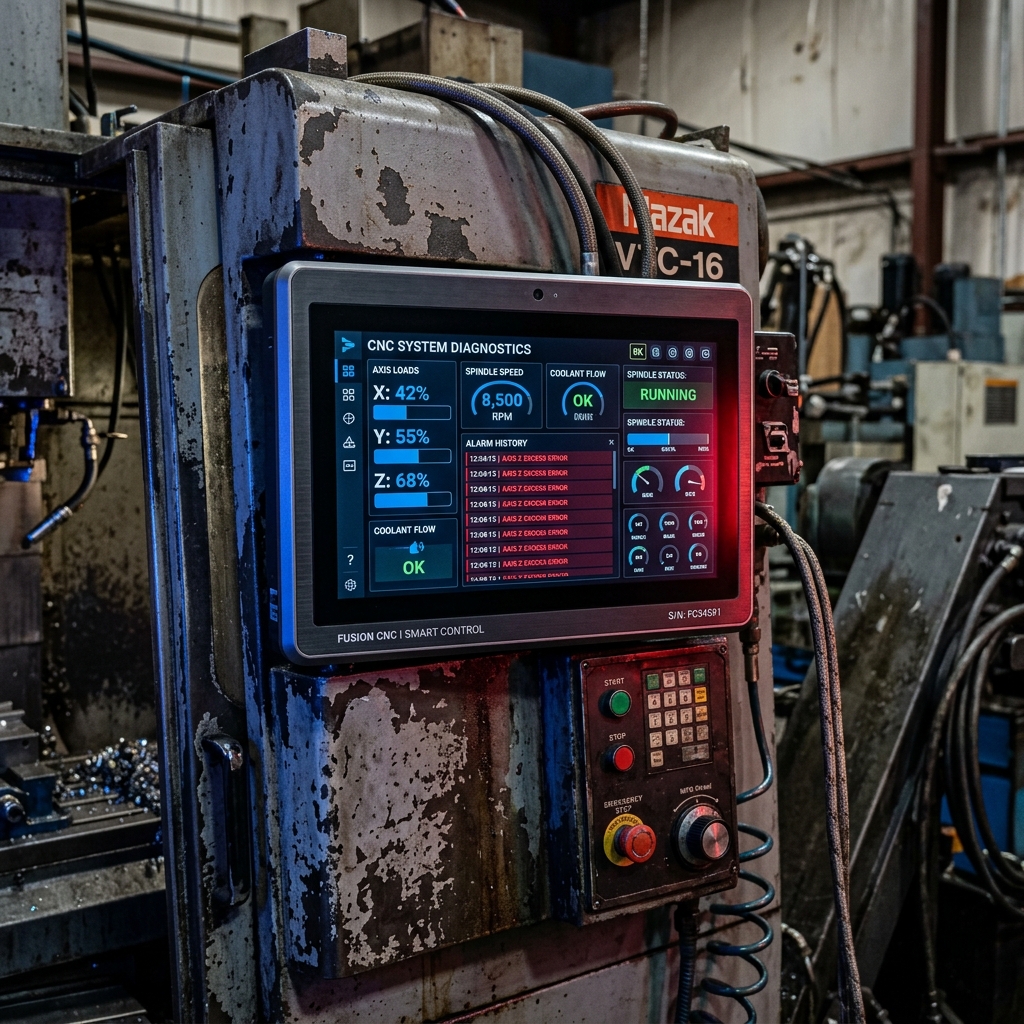
In high-precision manufacturing, mechanical components such as heavy castings, precision guide ways, and ball screws often outlive the electronics that control them. While the structural frame of your machine tool remains perfectly aligned and capable of micron-level repeatability, an outdated, slow, or unsupported CNC controller represents an operational liability. Hardware failures lead to weeks of costly downtime because replacement chips are no longer produced, and the machine lacks the networking interfaces required for modern factory lines.
This is where CNC Retrofitting becomes a powerful, high-ROI business decision. Rather than scrapping a mechanically superior machine and investing in high capital expenses (CapEx) for a new casting, retrofitting replaces the old brain, drive system, and motors with state-of-the-art hardware. Below, we break down the engineering philosophy, execution lifecycle, and operational ROI of retrofitting using the industry standard: Fanuc FA Systems.
Why Scrapping Mechanically Sound Assets is a Mistake
Modern machine structures are often lighter and less rigid than their predecessors from 10 or 20 years ago. A heavy casting from the late 90s or early 2000s possesses incredible thermal stability and mechanical damping. If your spindle cartridge, guide ways, and tool changers are solid, the machine structure itself is an asset. Scrapping it is economically inefficient. By upgrading the controller, you gain:
- 30% Efficiency Gain: Advanced trajectory control algorithms, fast block processing speeds, and modernized servo tuning decrease cycle times.
- Zero Obsolescence Risk: Replacing outdated controls with brand new components backed by factory warranties ensures parts availability for at least a decade.
- Industry 4.0 Readiness: Ethernet connectivity, MTConnect protocols, and IoT integration enable real-time status reporting and remote diagnostics.
"A CNC retrofit is not just a repair; it is a technological leap that restores the productivity of a premium asset to modern competitive standards at a fraction of the cost of new procurement."
Selecting the Core: Why Fanuc 0i-F Plus is the Gold Standard
At CncSonic, we specialize in Fanuc FA integration. The Fanuc 0i-F Plus control suite is the premier selection for general retrofits. It offers unmatched reliability (boasting Mean Time Between Failures [MTBF] measured in decades), alongside advanced features such as:
1. High-Speed Processing (Fine HSSB)
Modern 3D machining profiles consist of thousands of tiny linear increments. Older controls bottleneck on this data, slowing the feed rate. The Fanuc 0i-F Plus processes blocks in microseconds, maintaining programmed velocity and eliminating tool chatter marks.
2. Fine Surface Technology
Built-in jerk limitation and servo path acceleration smoothing produce superior surface finishes, reducing post-machining polishing stages for tool-and-die or aerospace parts.
3. Custom Screen Customization (Picture Tool)
Certified integrators can design custom operator screens, making it easy to align the UI with existing workshop standards and reduce the learning curve for machine operators.
The 5-Step CNC Retrofitting Lifecycle
Retrofitting requires deep field engineering expertise. A typical project handled by CncSonic follows these precise stages:
- Mechanical Audit & Pre-Check: Measuring backlash, verifying guide way alignment, checking spindle concentricity, and defining the scope of electrical work.
- Systems Design: Selecting the correct motors, sizing servo drives, mapping input/output (I/O) layouts, and drafting electrical cabinet prints.
- Cabinet Integration: Stripping outdated wiring. Mount new Fanuc drives, safety circuits, line filters, and routing electrical runs.
- Software Engineering (PLC Customization): Writing new ladder logic for tool changers, safety interlocks, coolant loops, and gearing transitions.
- Calibration & Commissioning: Laser interferometer calibration, motor tuning for axis harmonization, test cut verification, and operator training.
Calculating the ROI
Typically, a complete retrofit costs only 30% to 50% of the price of a comparable new machine tool. Furthermore, because a retrofit does not require rigging out heavy castings or pouring new concrete foundations, commissioning timelines are reduced from months to weeks. The reduction in downtime, combined with localized parts support, means retrofits typically pay for themselves within 12 to 18 months of operation.